Mattress care and natural bedding
How to Choose a Mattress Protector for a Natural-Fiber Bed
A good mattress protector should do its job quietly: fit securely, suit your everyday protection needs and preserve the comfort of the bed underneath. For a natural-fiber mattress, that means looking beyond a product label to examine fabric, fill, construction, care instructions and fit.
Natural materials can bring a particular feel to a bed, whether the mattress uses cotton, wool or latex. A protector adds another layer to that system, so the right choice is the one that guards the mattress without making it feel unfamiliar. Here’s how to compare the details—and what the cotton-and-wool Vispring Lux Skirted Mattress Protector can illustrate about construction and care.
First, decide what you need protection from
“Mattress protector” can describe products with different jobs. Some are primarily textile barriers against dust, everyday wear, body oils and perspiration. Others are designed to resist liquid, offering more substantial coverage against spills or accidents. These functions are not interchangeable, so identify the risk you are trying to manage before comparing materials.
A breathable, washable fabric layer may be enough if your main goal is to keep a mattress cleaner between routine care. If liquid exposure is a realistic concern, check that a product specifically states it is waterproof or otherwise offers the level of liquid protection you require. Do not assume that cotton, wool, a quilted surface or a natural-material description makes a protector waterproof. Read the product specifications and care guidance carefully.
There is a trade-off to consider: greater liquid resistance can involve a barrier layer that changes the feel or airflow of the surface. Some protectors are designed to be quiet and flexible, but the experience varies by construction. A natural-fiber bed does not automatically require a natural-fiber protector; the important thing is to match the protector’s function and feel to your priorities.
- For routine care: Look for a well-fitting, washable layer and follow the mattress maker’s cleaning recommendations.
- For spill exposure: Confirm that the protector is explicitly described as waterproof or appropriate for the specific risk.
- For preserving mattress feel: Consider thickness, quilting, fabric texture and whether the protector includes a membrane or other barrier.
Measure the bed before you shop
A protector that is too loose may shift, wrinkle or bunch beneath the sheet. One that is too tight may strain its seams, resist fitting over the corners or pull upward during the night. A secure fit begins with knowing the mattress dimensions and the complete depth of the surface you want to cover.
Measure the mattress at its deepest point, including any built-in pillow top or attached comfort layer. If you use a separate topper, decide whether the protector should go over the topper or directly around the mattress. That choice affects the dimensions you need: a protector fitted only to the mattress may not cover a thick topper, while one sized for the combined height may fit loosely if the topper is later removed.
Product descriptions often give a maximum mattress depth or a pocket measurement. These numbers are useful, but check how the manufacturer defines them. Pocket depth may refer to the fabric panel that stretches over the sides, while a stated fit range may account for elastic or stretch construction. When in doubt, compare the product’s guidance with your measurements rather than relying on a size label such as “Queen” alone.
Pocket depth and skirt construction
The pocket is the portion of a fitted protector that wraps around the mattress edge. The skirt is the material that continues underneath, often with elastic to hold the protector in place. A deeper mattress generally needs a deeper pocket, but the total measurement and stretch of the skirt also matter. A flexible skirt can accommodate some variation; it cannot make every size work on every bed.
The Vispring Lux Skirted Mattress Protector is described as having a fitted style, a fully elasticated skirt and a 13.75-inch pocket. That specification makes it especially important to compare your mattress depth with the stated pocket measurement before ordering. Also account for any separate topper if the protector is intended to enclose it. A precise fit is more useful than assuming that a skirt will stretch far beyond its stated design.
Understand what the fabric and fill contribute
The cover fabric is the surface closest to your fitted sheet, so its texture and breathability can influence how the bed feels. Cotton is widely used in bedding for its familiar, soft hand and its ability to absorb moisture. The exact feel depends on how it is woven, whether it is quilted and what other materials are included.
Fill changes the structure of a protector. A lightly padded layer may add a small amount of cushioning; a quilted protector can feel more substantial. Wool fill is often selected for its moisture-managing and temperature-regulating qualities, though individual comfort varies, and no material can guarantee a particular sleep temperature. A protector should not be treated as a substitute for a mattress with the support or cushioning you need.
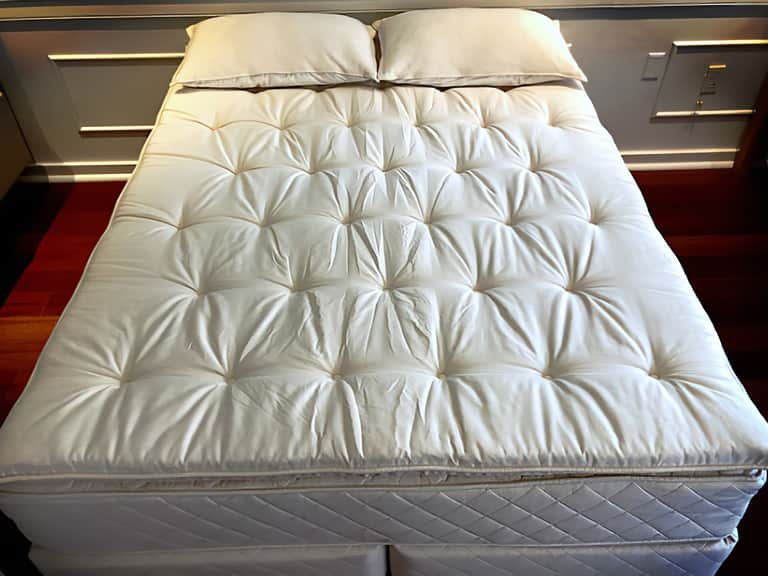
The Vispring Lux model combines an organic cotton outer with British wool fill, according to its product description. Its quilted construction creates a softly layered surface, while its fitted skirt is intended to help keep it in place. This is a useful example of how a cotton mattress protector can include a distinct natural filling rather than being a single layer of fabric. The blend may appeal to shoppers seeking cotton and wool in their bedding, but it is not the right choice by default for every bed or every protection need.
Material names alone are not a full assessment. If a product’s organic status, sourcing, processing or chemical standards matter to you, look for specific documentation and certifications. An adjective such as “natural” does not tell you everything about how an item was made. Likewise, a certification applies to the scope stated by the certifying program; it should not be taken as proof of unrelated performance claims.
Check whether the protector preserves the mattress feel
For many shoppers, the most noticeable test is simple: does the bed still feel like the bed they chose? A thick or heavily quilted protector can add softness and loft. A taut, smooth layer may make less difference to the surface. Waterproof barriers can also affect the hand or movement of the fabric, although designs vary.
Think about the mattress’s existing construction. A natural latex bed may have a responsive, gently contouring surface, while wool or cotton layers may contribute a different kind of cushioning. A protector should not be expected to transform the mattress, and it should not be so bulky that it changes the comfort balance unintentionally. If preserving the original feel is your priority, compare thickness and construction, then consider trying the protector with your usual fitted sheet if the seller’s return policy allows.
Pay attention to movement as well. A protector that slides over the mattress or gathers under a sheet can become distracting even if its material feels pleasant. Correct sizing, elastic placement and an appropriate pocket depth all help reduce shifting. Recheck the fit after laundering, since fabric care and shrinkage can affect dimensions.
Read the washing instructions before committing
Washability is part of everyday performance. A protector that suits your materials but is difficult to clean may not be practical for your household. Before buying, find out whether it can be machine washed, what water temperature is recommended, whether tumble drying is allowed and whether special detergents or restrictions apply.
For the Vispring Lux Skirted Mattress Protector, the supplied care guidance recommends washing monthly on a gentle cycle in cold water with similar colors and a natural detergent. It advises avoiding whiteners or bleach, using non-chlorine alternatives when needed, and line drying or tumble drying on low. The instructions also caution against fabric softeners and dryer sheets, which can reduce the absorbency of natural cotton. Follow the current label and manufacturer guidance for the specific item you receive.
Those details matter because heat, strong cleaners or unsuitable additives may affect fabric, fill, elastic or performance. Never assume that a natural-fiber protector can be treated like ordinary sheets. If you expect frequent laundering, consider the time required to dry the product fully and whether you want a second protector available while the first is being cleaned.
Routine washing is not the only part of care. Remove spills promptly according to the care instructions, avoid putting a damp protector back on the mattress, and allow the mattress surface to dry completely when necessary. Moisture trapped between bedding layers can be difficult to notice, so careful drying is a sensible part of mattress maintenance.
Match the protector to the mattress maker’s care advice
A protector is one piece of a larger care plan, not a guarantee that a mattress will remain like new. Check the mattress warranty and manufacturer instructions for requirements or exclusions related to spills, stains, moisture and cleaning. Some manufacturers recommend using a protector; others may specify what kind is suitable. These terms can differ, so keep the documentation for your own mattress.
Natural-fiber components also call for sensible handling. Wool and cotton can respond differently to moisture and heat than synthetic materials, and mattress covers may not be removable or machine washable. Do not unzip or wash a mattress cover unless the maker explicitly permits it. A removable protector can make routine cleaning easier, but it cannot replace proper mattress care or repair damage that has already occurred.
Inspect the protector from time to time. Look for thinning, damaged seams, stretched elastic, persistent odor or a change in fit. A worn protector may no longer stay securely in place or provide the coverage you bought it for. Replacing it when its condition declines is more useful than relying on a familiar product indefinitely.
A practical comparison checklist
Product pages can make a protector sound simple, but a short checklist helps separate useful details from broad promises. Before you choose, confirm each point against your mattress and your intended use:
- Purpose: Is it intended for routine wear, spill protection or both?
- Coverage: Does the description explicitly confirm waterproofing if you need liquid protection?
- Dimensions: Do the mattress size and pocket depth suit your bed, including any topper?
- Construction: What are the cover fabric, fill, quilting and skirt made from?
- Feel: Will the thickness or texture change the surface in a way you welcome?
- Care: Can you follow the washing and drying instructions conveniently?
- Compatibility: Does the mattress manufacturer permit or recommend this kind of protector?
- Claims: Are certifications and material descriptions specific enough to verify?
- Fit over time: Is the elastic likely to remain secure, and is the product easy to refit after washing?
Common mistakes to avoid
Choosing by fabric alone. Cotton can feel comfortable, but the word does not tell you whether the protector is waterproof, how thick it is or whether it will fit your mattress.
Ignoring the full bed height. A plush top or separate topper can make a standard pocket too shallow. Measure the actual setup rather than relying only on the mattress size printed on a tag.
Assuming “breathable” means spillproof. Breathability and liquid resistance are different product characteristics. Look for a clear statement of the coverage offered.
Overlooking laundry limits. A protector that cannot be dried quickly or has strict cleaning requirements may be inconvenient in real life. Care instructions are part of the buying decision, not fine print to ignore.
Expecting a protector to fix comfort problems. A pad can change the surface feel slightly, but it is not a reliable solution for an unsuitable mattress, persistent pain or a support problem. If you have ongoing symptoms, seek appropriate professional advice rather than relying on bedding alone.
Is the Vispring Lux Skirted Mattress Protector a fit?
The Vispring Lux offers a clear example of a natural-material protector: its listed construction pairs an organic cotton outer with British wool fill, and its fitted design includes a fully elasticated skirt. The care guidance is specific, including a gentle cold wash and low-heat or line drying. For someone who wants a quilted textile layer and is comfortable following those instructions, those details provide a useful basis for comparison.
The product description does not identify it as waterproof, so shoppers who need reliable liquid protection should not assume that it provides that function. Its 13.75-inch pocket also deserves a careful fit check against the mattress and any topper. The best assessment is not whether the materials sound appealing in isolation, but whether the product’s coverage, dimensions and maintenance match the bed and household.
You can review its listed specifications and care details on the Vispring Lux Skirted Mattress Protector product page. Confirm current product information before purchasing, since specifications and policies can change.
The bottom line
Choosing a mattress protector for a natural-fiber bed is a practical balancing act. It should offer the kind of coverage you actually need, fit the full mattress securely, feel comfortable beneath your sheets and be manageable to clean. Cotton and wool can make an appealing combination for shoppers who value natural bedding, but a material preference does not replace checking pocket depth, waterproof claims and care requirements.
Measure first, read the product details closely and compare them with your mattress maker’s guidance. A well-chosen protector should help with everyday care while letting the bed remain comfortable and familiar—a quiet layer that works in the background, night after night.
Frequently asked questions
Does a cotton mattress protector protect against spills?
Not necessarily. Cotton describes a material, not a waterproof rating. Check the product specifications for an explicit statement about liquid protection if spills are a concern.
How do I know what pocket depth I need?
Measure the mattress at its deepest point and account for any topper the protector must cover. Compare that measurement with the stated pocket depth or fit range, and follow the product maker’s sizing instructions.
Can I wash a wool-filled mattress protector in a machine?
Care varies by product. Follow the label and manufacturer instructions rather than assuming all wool-filled protectors can be washed the same way. The Vispring Lux guidance recommends a gentle cold machine wash and low-heat or line drying.
Will a protector change the feel of a natural mattress?
It can, depending on the fabric, quilting, fill and thickness. A lightly constructed layer may make little difference, while a loftier protector can add softness. Check construction details and consider how the protector feels with your normal sheets.