Mattress buying guide
What to Look for in a Naturepedic Organic Mattress
Shopping for an organic mattress can feel like reading a new language: latex, quilted layers, certifications, and a long list of claims about what is—and is not—inside the bed. A calmer way to compare Naturepedic models is to look past the headline and examine the full construction, the documentation, and the feel you actually want.
Published November 3, 2026
A mattress is an everyday purchase in the most literal sense. You notice it when you climb into bed, when you shift positions at 2 a.m., and when you make the bed the next morning. If you are considering a Naturepedic organic mattress, the goal is not simply to find the model with the most appealing label. It is to understand how its materials and design come together—and whether that combination suits your body, bedroom, and budget.
“Organic” can be a useful starting point, but it is not a complete description of comfort or performance. Two mattresses may use some of the same certified materials and still feel entirely different because their layers, firmness, and support systems are not alike. A thoughtful comparison considers what is in the cover, what provides cushioning, what supports your weight, and how each part is verified.
This guide offers a practical framework for comparing options. Product lines and specifications can change, so consult the current model page and request written details before making a purchase. Treat certifications as helpful evidence about defined materials or processes—not as a promise that one mattress will feel right for everyone.
Start with your own sleep preferences
Before comparing labels, take a moment to describe the mattress you are hoping to find. Do you like a cushioned surface that gently yields, or a more buoyant, stable feel? Do you sleep mostly on your side, back, or stomach? Do you share the bed with someone who has different preferences? These answers can narrow the field more effectively than a long list of features.
Firmness is especially easy to misunderstand. It describes the initial feel of the surface, not a universal measure of whether a mattress will support your body well. A mattress that feels plush to one person may feel quite firm to another, depending on body shape, weight distribution, and sleeping position. Likewise, a firm surface is not automatically the best choice for back comfort. Comfort and alignment are personal, and no material label can replace trying the mattress when possible.
- Side sleepers often look for enough cushioning at the shoulder and hip, while still wanting the torso to feel supported.
- Back sleepers may prefer a balanced surface that cushions the body without allowing the hips to sink excessively.
- Stomach sleepers commonly consider a more supportive feel to help limit excessive sinking around the midsection.
- Combination sleepers may value an easy-to-move-on surface and a construction that feels comfortable in more than one position.
These are broad starting points, not rules. If you share a bed, consider whether the mattress can accommodate different comfort needs on each side, if that option is available for the specific model. Ask how any side-specific configuration works and whether it affects the price, dimensions, or delivery.
Look at every layer, not just the cover
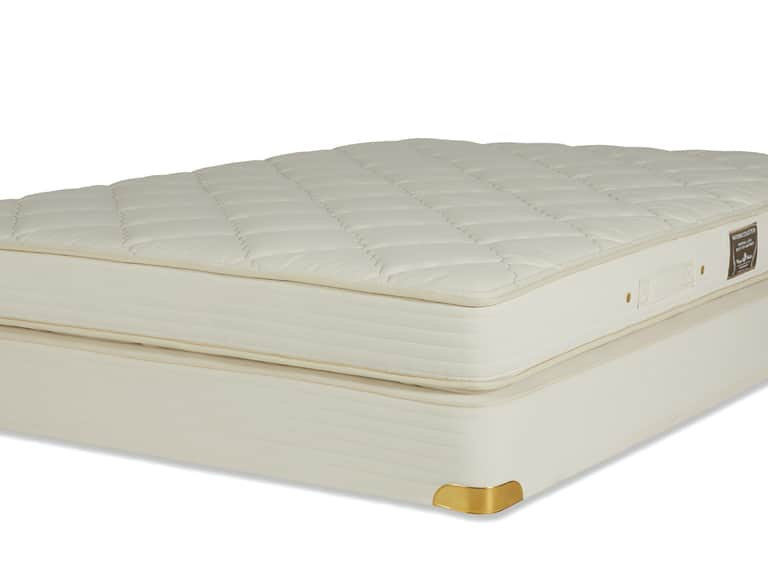
A mattress is a system of materials. The cover is the first point of contact, but the comfort layers beneath it shape the surface feel, and the support core influences how the bed responds under weight. When assessing a Naturepedic organic mattress, look for a clear description of each part and how it is assembled.
The cover and quilted surface
Check the cover’s fiber content and whether it is quilted with additional materials. A cotton cover, for example, tells you about one part of the construction, but not necessarily what lies underneath it. Ask whether the quilting includes wool, cotton, or another fill, and whether the cover is removable or intended to remain in place. “Natural” and “organic” should be supported by specific material details rather than used as stand-alone assurances.
Care matters here, too. A cover that cannot be removed may need spot cleaning, while some removable covers may still have restrictions on washing. Read the care instructions before purchase, especially if spills, pets, or allergies are part of your household considerations. A protector can help guard against ordinary moisture and wear, but confirm that its fit and materials are compatible with the mattress and do not compromise the feel you chose.
Comfort layers
Comfort layers are designed to cushion and respond to the body. Depending on the model, a mattress may use latex, cotton, wool, foam, or a combination of materials. The precise type and thickness matter. A thin layer can create a different sensation from a deeper cushion, even when the same broad material category appears in both descriptions.
Ask what each layer does and whether its composition is fully identified. If a page says “latex,” clarify whether it means natural latex, a blend, or another formulation. If it uses terms such as “organic latex,” ask which component is certified and whether the certification applies to the material itself or to a broader product standard. Clear answers make comparison easier and help you avoid treating a familiar-sounding word as a full specification.
The support core
The support core gives the mattress its underlying structure. It may consist of latex, coils, foam, or another design, depending on the model. Ask how the core is built, what materials are included, and whether the manufacturer provides information about zoning, edge support, or internal components. These features can influence how the bed feels when you sit near the edge, move across the surface, or sleep close to a partner.
Construction details also help explain why two organic mattress models can have different price points. The number of layers, type of support system, amount of certified material, and degree of customization may all contribute. A higher price does not automatically mean a better personal fit, so compare the specifications with the features you will actually use.
Read certifications with a discerning eye
Certifications can help buyers verify claims, but the certificate name alone does not tell the whole story. Some certifications assess particular fibers or agricultural practices; others focus on emissions, chemical inputs, or manufacturing processes. Their scope differs, so the useful question is not simply “Is it certified?” but “What exactly is certified, by whom, and for which part of this mattress?”
Look for the certification name, the entity that issued it, and details about the product or material covered. Where available, check the certification organization’s own directory or documentation rather than relying only on a marketing summary. A certified cover does not necessarily mean every internal component carries the same certification. Conversely, a mattress may include components with different forms of verification, so ask for a component-by-component explanation.
Certifications are not comfort ratings. They do not tell you whether a mattress will feel soft, reduce motion transfer, or suit your sleeping position. Nor should a certification be read as a blanket statement about every environmental or health concern. Use it as one piece of evidence alongside complete material disclosure, construction information, and practical testing.
When product language feels broad, ask for clarification in writing. Helpful questions include: Does the certification apply to the finished mattress or to a specific ingredient? Is the certificate current? Are all layers named? Are there materials in the product that are not covered by the certification? A careful retailer or manufacturer should be able to point you toward precise documentation instead of asking you to rely on a general reassurance.
Consider temperature, motion, and day-to-day use
Materials can contribute to how a mattress feels through the night, but no single ingredient guarantees that you will sleep cool or warm. Your bedroom temperature, sheets, sleepwear, personal comfort, and the mattress construction all play a role. If you tend to overheat, ask about the complete build rather than assuming that a natural fiber or open construction will resolve the issue. If you often feel cold, consider the same system from the other direction.
For couples, motion transfer and edge feel may matter as much as the surface comfort. Ask how the mattress responds when someone changes position and whether the edges feel stable enough for sitting or sleeping. These qualities are hard to judge from a materials list, so an in-person trial or a clear home trial policy can be valuable. If you cannot test the exact model, ask whether the showroom version has the same construction and configuration as the one you plan to order.
Also check the mattress’s compatibility with your foundation or adjustable base. Confirm the required support, slat spacing if relevant, and whether the manufacturer has restrictions that could affect warranty coverage. Measure bed-frame dimensions and room access before delivery; a mattress that fits the bed may still be difficult to maneuver through a stairwell or narrow doorway.
Understand customization and firmness choices
Some mattress designs offer more than one firmness option, and certain constructions may permit different configurations across a shared bed. That flexibility can be appealing, but it helps to understand exactly what can be changed. Is the adjustment made when ordering, or can layers be rearranged later? Are exchange parts available? Is there a fee, a time limit, or a required condition for returning a layer?
Ask how a stated firmness is determined and whether it refers to the whole mattress or one component. If you are choosing a multi-layer design, request an explanation of how the layers interact. A soft upper layer over a supportive base may feel quite different from a mattress that is uniformly soft throughout. The best choice is not necessarily the one with the most options; it is the one whose available choices you can evaluate and whose adjustment policy is practical for you.
If you and a partner prefer different feels, confirm whether separate configurations are available for your chosen size. Ask whether a split surface creates a perceptible seam, how the layers stay in place, and whether both sides can be adjusted independently after delivery. These are small details on a product page but meaningful details in everyday use.
Read the trial, return, and warranty terms carefully
A generous-sounding trial period can be reassuring, but the fine print determines how useful it is. Confirm when the trial begins, whether the mattress must be used for a minimum period, and what happens if it does not suit you. Ask about return shipping, pickup arrangements, restocking charges, and whether the mattress must be in a particular condition. For a customized model, find out whether the same return terms apply.
Warranty coverage is a separate matter from a comfort trial. A warranty usually addresses defined defects under stated conditions; it is not a promise that the mattress will feel unchanged indefinitely or that it will resolve discomfort. Read the coverage period, exclusions, required foundation specifications, and the process for filing a claim. Keep your receipt and any documents that describe the model and configuration you purchased.
Delivery and setup deserve a place in the budget conversation. Ask whether delivery includes carrying the mattress into the room, removing packaging, setting up a base, or taking away an old mattress. Services vary by location and order, so confirm the details and any fees before checkout. A clear estimate can prevent a last-minute surprise on delivery day.
A practical Naturepedic comparison checklist
When you compare Naturepedic models, use the same questions for each one. That makes it easier to distinguish meaningful differences from persuasive wording.
- What materials are used in the cover, quilting, comfort layers, and support core?
- Are all components identified by type and, where relevant, by source or certification?
- Which certifications apply, and do they cover a specific material or the complete mattress?
- What firmness choices are available, and how might the construction feel in your usual sleep position?
- Can the configuration differ across sides, and can layers be changed after purchase?
- What are the care instructions, including guidance for stains, spills, and mattress protectors?
- Will the mattress work with your existing foundation or adjustable base?
- What are the current trial, return, warranty, delivery, and setup terms?
- Can the retailer provide the specifications and policy details in writing?
Keep the answers together rather than relying on memory after several showroom visits or online comparisons. A simple note for each model—materials, feel, certifications, policy terms, and total delivered cost—can bring clarity to a decision that otherwise becomes a blur of similar-sounding claims.
The bottom line
The most useful way to assess a Naturepedic organic mattress is to connect its materials to your own needs. Start with the feel and support you prefer, then examine every layer, verify what certifications cover, and check the care and policy details that will matter after delivery. A well-described mattress should make it possible to understand not only what is included, but also what remains uncertain.
There is no universally perfect organic mattress. A careful buyer looks for transparent construction, credible documentation, a comfortable fit, and terms that make sense for the household. Take your time, ask specific questions, and compare the complete product rather than a single appealing label. That is a more dependable route to a mattress you can feel confident choosing.
This article is for general consumer education. Mattress materials and product specifications can change; confirm current details and policies directly with the manufacturer or retailer before purchasing. Comfort is individual, and mattress guidance is not a substitute for medical advice.